

Download it on:
10 Summer Safety Mistakes Dog Owners Make (And How to Avoid Them)
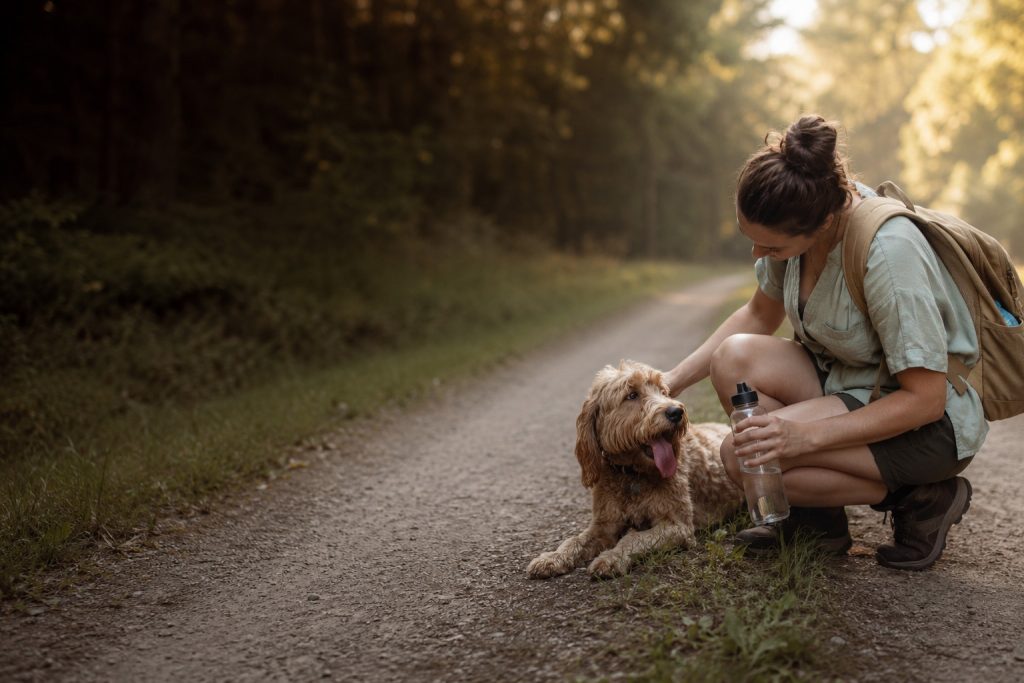
Summer sounds easy in theory. Longer days. More sunshine. More time outside. More little adventures with your dog. But for dogs, summer can be a lot harder than it looks.
They do not cool down the same way we do. They do not understand that the pavement is too hot. They may still want to follow you, play, walk, run, sniff, and explore — even when their body is already struggling.
So summer with your dog is not about doing more. It is about doing things smarter.
Here are the most important things to watch out for when temperatures rise.
1. Walk early, walk late, or skip it
A walk does not have to happen at the same time every day.
In summer, timing matters.
The safest times to walk your dog are usually early in the morning or later in the evening, when the air is cooler and the ground has had time to cool down. Midday walks, afternoon walks, and walks during direct sun can quickly become too much, especially on hot pavement or in humid weather.
If it is very hot outside, skipping a walk is not a failure.
Your dog can have a short toilet break, then do something calmer indoors instead: a frozen treat bowl, a lick mat, a scent game, a puzzle, or a short training moment.
A bored dog can be helped. An overheated dog needs urgent care.
2. Hot pavement can burn paws
This is one of the easiest summer dangers to underestimate.
The air may feel warm but manageable. The pavement can be much hotter.
Asphalt, concrete, stone, sand, and artificial surfaces can heat up fast in the sun. Your dog’s paw pads touch that surface directly, and burns can happen before you realise there is a problem.
Before walking on pavement, test it with your hand. Place the back of your hand on the ground. If you cannot comfortably hold it there for a few seconds, it is too hot for your dog’s paws.
If you absolutely have to walk during the day, avoid hot pavement as much as possible. Choose grass, shade, dirt paths, or cooler surfaces. Keep the walk short. Let your dog stop. And if your dog needs to walk on hot ground, protective dog boots can help protect the paw pads.
But boots are not permission for a long hot walk. They protect the feet, not the whole body. Your dog can still overheat.
3. Bring more water than you think you need
When you go out with your dog in summer, water is not optional.
Bring fresh water for your dog, not just for yourself. Bring a bowl or a portable bottle. Offer water often, especially if you are walking, hiking, travelling, or spending time away from home.
Do not wait until your dog looks exhausted.
Small, regular water breaks are better than one big drink after your dog is already too hot.
And remember: shade and water should travel together.
If you are stopping somewhere, look for shade first. Then offer water. Then give your dog time to rest before moving again.
4. If your dog wants shade, listen
Dogs often tell us when something is too much.
They slow down. They pull toward shade. They lie down. They stop walking. They look for grass instead of pavement. They pant harder than usual. They may seem restless, unfocused, or suddenly “stubborn”.
In summer, do not ignore these signs.
If your dog is pulling toward shade, they are not being difficult. They may be trying to cool down. Let them stop. Move them out of the sun. Offer water. Wait until their breathing settles before continuing.
And if they still do not want to move? The walk is over. That is not dramatic. That is responsible.
5. Know the signs of overheating
Heat stress can start quietly.
At first, it may just look like heavy panting or slowing down. But it can become dangerous quickly.
Watch for:
- Heavy panting that does not calm down
- Excessive drooling
- Bright red gums or tongue
- Weakness or wobbling
- Refusing to walk
- Seeking shade again and again
- Vomiting or diarrhoea
- Confusion
- Collapse
If you notice these signs, stop immediately. Move your dog into shade or a cool indoor space. Offer small amounts of water. Cool their body with cool water, especially around the belly, neck, and inner thighs. Do not use ice-cold water. Do not force them to drink. Contact a vet as soon as possible.
Heatstroke is an emergency. It is always better to react early than to wait and see.
6. Some dogs need extra care
Every dog can overheat, but some dogs are more at risk. Be extra careful with:
- Puppies
- Senior dogs
- Overweight dogs
- Flat-faced breeds
- Dogs with thick coats
- Dogs with heart or breathing problems
- Dogs that get overexcited and do not know when to stop
Flat-faced dogs, like French bulldogs, pugs, boxers, and similar breeds, can struggle more in the heat because panting is less efficient for them.
For these dogs, summer walks should be shorter, calmer, and cooler. Sometimes the safest activity is not a walk. Sometimes it is lying on a cool floor with a frozen lick mat.
7. Never leave your dog in a parked car
Not for five minutes. Not with the windows slightly open. Not in the shade.
Cars heat up extremely fast, and dogs can become dangerously overheated in a very short time.
If you cannot take your dog with you when you leave the car, it is safer to leave them at home. Summer errands and dogs usually do not mix.
8. Be careful with too much excitement
Summer is full of exciting things. Picnics. Lakes. Trips. New places. Visitors. Kids. Barbecues. Long days outside.
But excitement creates body heat too.
A dog who keeps running, playing fetch, chasing a ball, or jumping around in the heat can overheat even if they are having fun, especially if they do not naturally stop when they should.
So you may need to be the one who ends the game. Choose slower activities: sniffing, gentle exploring, indoor enrichment, frozen treats, quiet training, or short shaded breaks.
The goal is not to tire your dog out. The goal is to keep them safe and comfortable.
9. Protect against sun, ticks, and summer skin problems
Summer safety is not only about heat.
Light-coloured dogs, dogs with thin coats, and dogs with exposed skin can get sunburned, especially around the nose, ears, belly, or areas with less fur. Use pet-safe sunscreen if needed, and ask your vet if you are not sure what is safe.
Ticks and fleas are also more active in warm weather. After walks in grass, woods, meadows, or hiking areas, check your dog carefully: ears, neck, paws, belly, armpits, and around the tail.
Also keep your dog’s coat brushed. Removing loose hair and tangles can help their coat work better in warm weather. But do not shave your dog without proper advice, because the coat can also protect their skin from sun and heat.
10. Have a simple summer walk rule
Here is a simple one:
- If the ground is too hot, the walk is too hot.
- If your dog keeps looking for shade, take a break.
- If your dog is panting hard, slow down.
- If you forgot water, go back.
- If you are unsure, choose the safer option.
Your dog does not need a perfect summer. They need a safe one.
A short morning walk, a shady sniff, a bowl of fresh water, and a calm activity at home can be more than enough.
Because sometimes the best summer adventure is knowing when to stop.
And on the days when a walk just is not safe, that does not mean your dog has to be bored. Woofin has plenty of low-effort, indoor enrichment activities built for exactly these moments — quick games to keep their mind busy while their body stays cool.